
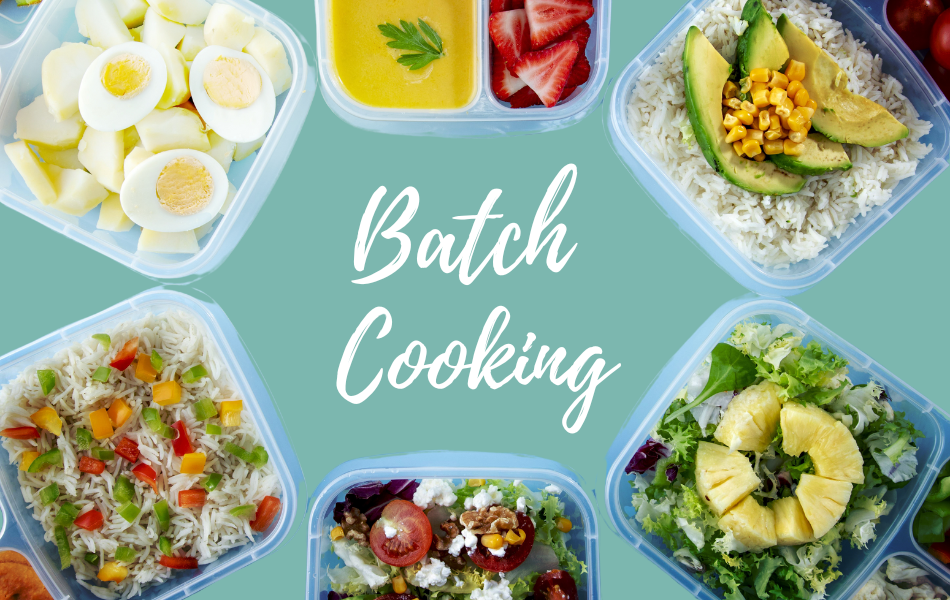
Batch Cooking Is So Much More Than Meal Prep
If you live with IBS, bloating or unpredictable digestion, food can start to feel like a full-time job. You have to decide what to eat, check whether you have the ingredients, prepare it, cook it, clean up after it and somehow do all of that while working, caring for other people and generally having a LIFE.
So what happens on the days when you are tired, busy, late home, hormonal, stressed or simply cannot be bothered?
You skip the meal. You grab whatever is quickest. You order something that looks innocent but contains half the contents of a chemistry cupboard. Or you stand in front of the fridge hoping that a balanced meal will assemble itself through the power of positive thinking.
And then your gut pays the price.
This is where batch cooking comes in. Not as another giant job for your ‘To Do’ list, but as a way of creating SOLUTIONS before you need them.
You Are Making Food for the Future ‘You’
Batch cooking is often sold as a time-saving trick. And yes, it absolutely saves time. But I think it goes much deeper than that.
When you make your own food, you bring the energetic connection back into what you are eating. You choose the ingredients. You wash them, chop them, season them and turn them into something designed to nourish you. Your meal has not simply appeared from a factory line with a sixty-day shelf life and an ingredients list you need a magnifying glass to read.
You have made it with intention.
And when you portion that food and place it in the fridge or freezer, you are doing something incredibly kind for the version of you who will be hungry on Wednesday night with no time, no energy and precisely ZERO interest in starting dinner from scratch.
You are not only creating food. You are removing a future obstacle. You are answering ‘I don’t have enough time to eat properly’ before that thought even has a chance to take over.
That is what a homemade ready meal really is: a solution you created for yourself in advance.
Your Gut Brain and Nervous System Are Part of This Too
There is a psychological shift when you start preparing food to support your body rather than waiting until you are starving and reacting to whatever is available.
You reconnect with your diet. You make a conscious decision that your gut matters. You are effectively saying, ‘I know you have been struggling, and I am going to look after you.’
Does your bowel have a tiny voice saying, ‘Cheers, Helen, I appreciate the casserole’? Obviously not. But your gut and brain are in constant communication, and your body responds to stress, routine, expectation and the environment in which you eat.
When meals feel chaotic, rushed or frightening, the nervous system can stay on high alert. When familiar food is ready, you know what is in it and you know it suits you, that removes decision fatigue and creates a greater sense of safety around eating.
In very ‘Helen’ terms: your gut knows you care. You have prepared food to help it heal, nourish it and make its job easier. So it has far less reason to kick TF off because you have ignored it all day and then thrown a random ultra-processed meal at it at 9pm. Ewwww…
Inside The IBS Freedom Method, this is part of the wider shift from reacting to symptoms to creating routines that support the gut consistently.
Batch Cooking Removes the No Time Barrier
‘I don’t have time to eat properly’ is usually not a problem that appears at lunchtime. It begins days earlier, when there is no plan and nothing useful in the fridge.
Batch cooking changes the question from ‘What on earth am I going to make tonight?’ to ‘Which one of my meals do I fancy?’
That is a VERY different headspace.
Having suitable food ready can help you:
- avoid skipping meals and arriving at the next one absolutely ravenous
- reduce impulsive choices when you are tired or stressed
- eat at more consistent times
- build meals around foods you already know your gut tolerates
- spend less on takeaways and emergency supermarket food
- reduce food waste by turning ingredients into finished meals
- make weekdays calmer because the decision has already been made
Consistency matters enormously when you are trying to understand your symptoms. If every meal is a last-minute experiment, it becomes much harder to see what is helping and what is sending your bowel into a small but passionate rebellion.
The Ripple Effect Reaches Beyond Your Plate
Once good food is already being prepared, the people around you may start eating it too. A partner takes a portion to work. A teenager grabs the homemade soup. A flatmate asks whether there is any of that chicken left. A friend comes round and eats what you have made instead of ordering a takeaway.
You have quietly made the healthier choice the easiest choice – not only for yourself, but for the people you live with and care about.
Those small changes have ripples. Better food supports energy, mood, digestion and long-term wellbeing. If it encourages the people you love to eat better too, you may be helping to prolong their health, happiness and quality of life without delivering a single lecture about kale.
That is the beautiful thing about caring for yourself properly: it often gives other people permission to care for themselves as well.
My Simple Batch Cooking Formula
Please do not turn this into a Sunday afternoon hostage situation involving seventeen recipes, forty containers and every saucepan you own.
Keep it simple. Choose:
- one or two proteins
- two or three vegetables
- one carbohydrate base
- one soup stew or complete meal for the freezer
- a few herbs dressings or sauces that suit your individual tolerances
That gives you building blocks rather than seven identical beige boxes labelled MONDAY through SUNDAY.
Cook once, then change how you serve it. Roast chicken can become dinner with potatoes and vegetables, a rice bowl the next day and a soup or salad lunch after that. Minced beef or turkey can become a bolognese, a cottage-pie filling or a simple bowl with rice and cooked vegetables.
The ingredients stay familiar. The meal does not have to feel repetitive.
Gut Friendly Foods to Batch Cook
There is no universal list of ‘IBS-friendly’ foods that suits every person. Your choices need to reflect your symptoms, food intolerances, stage of gut repair and individual tolerance. These are simply practical starting points that many people can adapt.
Proteins
- chicken thighs or breasts
- turkey mince or ground turkey
- beef mince or ground beef
- salmon or another fish you tolerate
- boiled eggs or a simple frittata for the fridge
- beans lentils tofu or tempeh if they suit your gut and diet
Cook several portions and use them as the anchor for different meals. If you are following one of the Vegetarian, Pescatarian or Omnivore meal plans inside The IBS Freedom Method, batch cooking makes staying with your chosen plan dramatically easier.
Cooked Vegetables
- roasted carrots courgettes zucchini peppers or aubergine eggplant
- steamed greens
- mashed root vegetables
- tray-baked vegetables with tolerated herbs
- simple vegetable soups
Many people find cooked vegetables easier to manage than large quantities of raw salad, particularly when the gut is already irritated. Your own tolerance always comes first.
Carbohydrates
- rice or rice-based dishes
- potatoes wedges mash or potato salad
- oats for overnight oats or baked oat portions
- quinoa if tolerated
- pasta or gluten-free pasta if appropriate for you
Make one base and serve it differently across the week. But pay particular attention to storing cooked rice safely – more on that below.
Meals That Earn Their Freezer Space
- soups and blended vegetable soups
- stews casseroles and slow-cooked dishes
- bolognese chilli or bean-based alternatives using tolerated ingredients
- cottage pie fish pie or lentil pie
- curries with your own carefully chosen spices
- portion-sized cooked proteins with vegetables and a carbohydrate base
Freeze in portions you will actually use. A two-litre brick of frozen soup is not terribly helpful when you want one bowl for lunch.
How to Keep It Interesting Without Creating More Work
The trick is to change the flavour and format rather than cook a completely different meal every night.
The same basic chicken, rice and vegetables can become:
- a warm dinner with herbs and olive oil
- a cold lunch bowl with a tolerated dressing
- a simple soup with stock
- a tray bake reheated in the oven or air fryer
- a wrap or stuffed potato filling if those foods suit your plan
You are not cooking seven separate meals. You are cooking useful components that can become several meals. THAT is where the time saving happens.
Your Own Ready Meal System
Once you find meals that work well, start building a small bank of reliable freezer options. You do not need thirty choices. Three to five meals you genuinely enjoy can rescue an astonishing number of busy days.
Label every container with:
- what it is
- the date you cooked or froze it
- how many portions it contains
- any finishing instructions such as add rice herbs or fresh vegetables
Rotate older meals to the front and use them first. Keep a note on the freezer door or your phone so you know what is there. Otherwise that lovely homemade dinner can disappear into the frozen wilderness until nobody can remember whether it is soup, curry or something from 2023.
Storage Cooling and Reheating Matter
Batch cooking only helps if the food is stored safely. ‘Trust your nose’ is not enough because harmful bacteria do not always change the smell, taste or appearance of food.
The Simple Fridge and Freezer System
- Refrigerate the meals intended for the beginning of the week.
- Freeze the later-week portions immediately.
- Defrost each portion safely in the fridge overnight.
- Cool rice quickly and refrigerate or freeze it promptly.
- Reheat food thoroughly and only reheat the portion being eaten.
- Label and date everything.
A Few Food Safety Basics
- Divide large pans of soup stew or chilli into smaller shallow containers so they cool more quickly.
- Keep raw meat and fish separate from cooked and ready-to-eat foods.
- Defrost food safely in the refrigerator or according to reliable manufacturer guidance.
- Reheat only the portion you intend to eat.
- Make sure the centre is thoroughly hot not merely warm around the edges.
- Follow stricter personalised advice if you are pregnant immunocompromised older or cooking for somebody at higher risk of food poisoning.
- When in doubt throw it out. A wasted portion is annoying. Food poisoning is considerably more annoying.
A Gentle Batch Cooking Routine That Actually Works
Choose a regular slot that fits your life. It might be Sunday afternoon, Tuesday evening or an hour while you are already making dinner.
Then use this simple rhythm:
- Check what you already have before buying more food.
- Choose two or three meals that share ingredients.
- Cook extra portions rather than doubling your workload.
- Keep the next day or two in the fridge and freeze the rest promptly.
- Label everything before it becomes an unidentified frozen object.
- Restock your freezer before it reaches emergency fish-finger territory.
You can start with ONE extra portion. That is still batch cooking. One future lunch sorted is one less decision, one less excuse and one more act of care for yourself.
Batch Cooking Is a Tool Not the Whole Answer
Batch cooking can reduce stress, save money and make consistent eating easier. But if you are reacting to everything, unsure what foods suit you or frightened to expand your diet, filling the freezer with random ‘healthy’ meals will not solve the underlying problem.
You still need to understand your symptoms, your individual food tolerances, how to balance your meals and how stress, hormones, hydration, medication and lifestyle may be affecting digestion.
That is exactly what we work through inside The IBS Freedom Method. Batch cooking then becomes one of the practical tools that helps you turn what you have learned into daily life – including the busy, messy, cannot-be-arsed days when you need your plan most.
Make Today Easier for Tomorrow You
The next time you cook, make one or two extra portions. Put them away safely. Label them. Then notice how it feels when a busy day arrives and dinner is already handled.
That meal is evidence that you planned ahead. You cared for your body. You removed a barrier. You created time where you thought you did not have any.
And you may just inspire the people around you to eat a little better too.
That is more than batch cooking. That is wellbeing with ripples.
Want Personalised Support
If IBS or digestive symptoms are making food feel stressful or exhausting, you do not have to keep guessing. Batch cooking works best when you know which ingredients and meals genuinely suit YOUR body.
If you would like support simplifying food choices, calming your gut and creating a plan that fits your real life, book your free Gut Health Call with Helen and let us talk through what is happening and whether The IBS Freedom Method is right for you.
About Helen Jane
Helen Jane is a qualified Nutritional Therapist and IBS Coach with over ten years of experience helping people reduce IBS, bloating, food intolerances, digestive discomfort and low energy through practical nutrition and lifestyle changes. As the founder of Your IBS Freedom and creator of The IBS Freedom Method, she supports clients across the UK, Europe and the USA.
Disclaimer
This article is for educational purposes only and is not a substitute for personalised medical advice, diagnosis or treatment. Seek advice from your GP or healthcare professional about persistent symptoms, significant dietary restriction, medical conditions or individual food-safety needs.
