

What Your Poo Is REALLY Telling You…
Why the Bristol Stool Chart matters more than you think.
Let’s talk about poo. Yep… we’re going there.
Because honestly? Your bowel movements can tell you a HUGE amount about your gut health, digestion, hydration levels, stress, inflammation, food intolerances and even how well your nervous system is functioning.
And yet most people:
- Never look properly
- Think their symptoms are “normal”
- Or only panic once things become severe
As an IBS Coach and Nutritional Therapist, one of the FIRST things I ask clients is:
“What are your bowel movements actually like?”
Because your stools are clues.
And the Bristol Stool Chart helps us understand those clues quickly and clearly.
What Is The Bristol Stool Chart?
The Bristol Stool Chart is a medical tool developed to classify bowel movements into 7 different stool types.
It helps identify:
- Constipation
- Normal bowel function
- Fast transit
- Diarrhoea
- Possible digestive dysfunction
In simple terms:
It helps show how quickly food is moving through your digestive tract.
And trust me… speed matters.
Too slow?
Waste sits fermenting in the bowel longer than it should.
Too fast?
You may not be properly absorbing nutrients, water or minerals.
Neither is ideal.
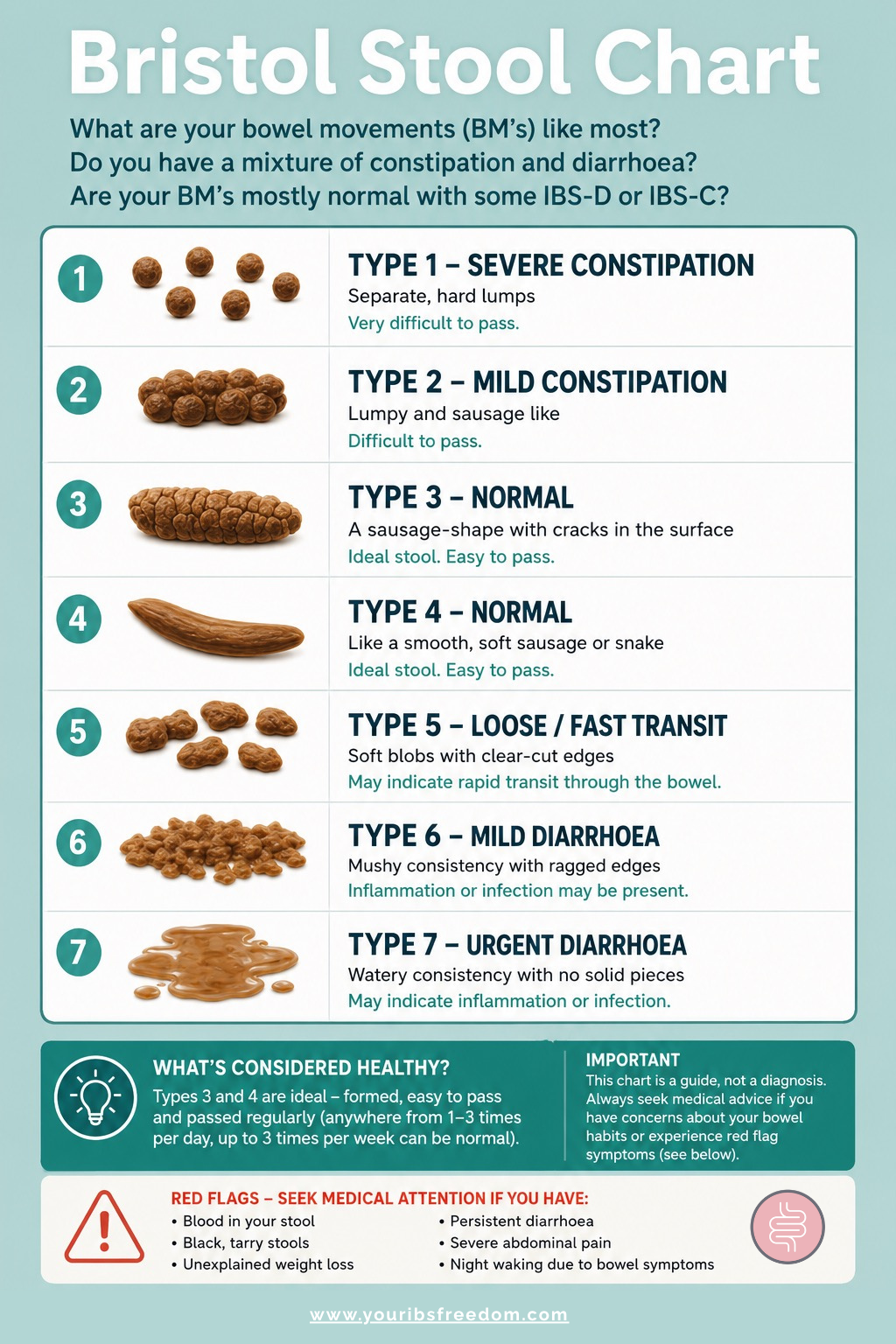
The 7 Stool Types Explained
Type 1 – Severe Constipation
Separate hard lumps.
This often suggests:
- Dehydration
- Lack of fibre
- Poor gut motility
- Stress
- Holding onto stools too long
- Low food intake
People often describe:
- Rabbit droppings
- Pebbles
- Straining
- Incomplete emptying
This is NOT ideal bowel function.
Type 2 – Mild Constipation
Lumpy sausage-shaped stools.
Still difficult to pass and often linked with:
- Slow transit
- Low hydration
- Poor digestion
- Nervous system stress
Many IBS-C sufferers sit between Types 1 and 2.
Type 3 & 4 – The Gold Standard
These are considered the healthiest stool types.
Type 3
A sausage shape with cracks on the surface.
Type 4
Smooth, soft and easy to pass.
Generally associated with:
- Good hydration
- Healthy bowel motility
- Balanced fibre intake
- Better microbiome health
- Efficient digestion
This is what we aim for MOST of the time.
Not perfection.
Just consistency.
Type 5 – Loose / Fast Transit
Soft blobs with clear edges, often sticky…
This can happen:
- During stress
- After certain trigger foods
- With caffeine overload
- Hormonal changes
- Mild gut irritation
Occasional Type 5 stools aren’t always a concern.
But if they’re happening regularly?
Something may be irritating the gut.
Type 6 – Mild Diarrhoea
Mushy stools with ragged edges.
This can indicate:
- Food intolerances
- Gut inflammation
- Infection
- IBS-D
- Anxiety-driven fast transit
- Poor absorption
Clients often tell me:
“It’s not full diarrhoea… just never properly formed.”
That matters.
Type 7 – Urgent Diarrhoea
Watery stools with no solid form.
This may suggest:
- Infection
- Acute inflammation
- Severe food reactions
- Viral illness
- Digestive distress
If persistent, this should always be investigated medically.
“But Helen… Mine Changes ALL The Time”
This is incredibly common in IBS sufferers.
Many clients fluctuate between:
- Constipation one day
- Diarrhoea the next
- Then “normal-ish” stools in between
This mixed bowel pattern can often point towards:
- Food intolerances
- Stress-related gut dysfunction
- Poor meal timing
- Gut microbiome imbalance
- Hormonal influences
- Nervous system dysregulation
Which is why guessing rarely works.
You need to look at patterns.
Your Poo Can Reveal More Than You Think
Your bowel movements can provide clues about:
- Hydration
- Fibre balance
- Gut bacteria
- Stress levels
- Food reactions
- Inflammation
- Digestive speed
- Nervous system function
And no…
Going “every few days” isn’t always normal just because you’ve done it for years.
I regularly work with people who:
- Thought bloating was normal
- Thought pain after meals was normal
- Thought urgency was normal
- Thought fatigue was unrelated
Until we started fixing the gut.
Red Flags – Please Don’t Ignore These
Seek medical advice if you experience:
- Blood in stools
- Black or tarry stools
- Persistent diarrhoea
- Severe abdominal pain
- Unexplained weight loss
- Night waking due to bowel symptoms
Please don’t self-diagnose serious symptoms.
One Of The Best Things You Can Do?
Keep a simple food and symptom diary for 7–10 days.
Track:
- Meals
- Bowel movements
- Bristol stool types
- Bloating
- Pain
- Stress
- Sleep
- Energy
Patterns often appear VERY quickly.
And once you identify patterns…
That’s when real progress can begin.
If you’re struggling with bloating, IBS, food intolerances, inconsistent bowel habits or digestive discomfort – you don’t have to keep “putting up with it.” Book a Free Gut Health Call here: Free Gut Health Call
About Helen Jane
Helen Jane is a qualified Nutritional Therapist and IBS Coach with over 10 years of experience helping people reduce IBS, bloating, food intolerances, digestive discomfort, and low energy through practical nutrition and lifestyle changes. As founder of Your IBS Freedom, she specialises in helping people improve gut health naturally using food as medicine – without restrictive fad diets or unnecessary overwhelm, supporting clients across the UK, Europe, and the USA. Read client success stories and reviews here: Your IBS Freedom Reviews
Disclaimer
This blog is for educational purposes only and is not a substitute for personalised medical advice, diagnosis, or treatment from your GP or healthcare professional.
