Food labels are boring… right up until the moment one saves somebody’s life.
Most of us pick up a packet, glance at the front and make a decision in seconds. High protein? Lovely. Natural? Excellent. Low fat, plant-based, gut-friendly and covered in pictures of leaves? Well, it MUST be healthy then… into the trolley it goes.
Except the front of the packet is marketing. It is designed to catch your eye, press all the right healthy-living buttons and persuade you to buy it. The back of the packet is where the useful information lives, and that tiny ingredients list can tell a very different story.
For somebody with a serious food allergy, reading it is not a wellness trend, a dieting trick or an optional extra. It can be the difference between eating safely and experiencing a life-threatening reaction. For everybody else, it is still one of the simplest and most useful habits you can build. It can help you spot ingredients that may be aggravating your gut, recognise ultra-processed food dressed up as health food, compare two similar products properly and make your own decision about what you are actually putting into your body.
So, turn the packet over. We are going to look at what really matters, what those bold words mean, how the UK and US rules differ, and what some of the colours, preservatives and mysterious E-numbers are actually doing in your food.
Food allergies can – and do kill
I want to be VERY clear about this, because food allergies are still dismissed far too casually. A food allergy is an immune-system reaction. It is not the same as a food intolerance, and it is not somebody being difficult, dramatic or fussy about what they eat.
An allergic reaction may begin with itching, hives, swelling, sickness or wheezing. In a severe reaction, known as anaphylaxis, the throat can swell, breathing can become difficult, blood pressure can fall and the person can go into shock. Without rapid treatment, that reaction can be fatal. This is not me being overdramatic to make you read the rest of the article. It has happened to real people and devastated real families.
In 2016, 15-year-old Natasha Ednan-Laperouse died after eating a baguette containing sesame that was not listed on the packaging. Her death led to a major change in UK food-labelling law. Natasha’s Law came into force in October 2021 and requires food that is pre-packed for direct sale, for example; a sandwich made and packaged on the premises before being placed on a shelf, to carry a full ingredients list with the regulated allergens emphasised.
That law exists because an undeclared ingredient cost a young girl her life. So when somebody checks a label, asks a waiter several questions or refuses food because the ingredients are unclear, please do not roll your eyes. They are not being awkward. They are likely protecting themselves.
If you are unsure about the difference between an allergy and an intolerance, read IBS and Food Intolerances vs Allergies. It is an important distinction, particularly if you are trying to understand whether your symptoms are immune-related, digestive, or part of a wider IBS pattern.
What are the UK 14 allergens
In the UK, food businesses must provide information about 14 regulated allergens when they are used as ingredients. On prepacked food, those allergens should be clearly emphasised within the ingredients list, usually in bold, so you can identify them without having to decode every word on the packet.
The 14 regulated allergens are:
- celery
- cereals containing gluten: wheat, rye, barley and oats
- crustaceans, including crab, lobster, prawns and scampi
- eggs
- fish
- lupin
- milk
- molluscs, including mussels, oysters, squid, snails and clams
- mustard
- tree nuts: almonds, hazelnuts, walnuts, cashews, pecans, Brazil nuts, pistachios and macadamias
- peanuts
- sesame
- soya
- sulphur dioxide and sulphites above the regulated concentration
Some are obvious, but others hide in places you might never think to look. Celery can turn up in stock cubes, mustard may be buried in a dressing or marinade, lupin flour can appear in bread and gluten-free products, and sesame is not limited to the seeds sprinkled on top of a burger bun. It may be present in tahini, houmous, oils and bakery products. Milk can appear in gravies, glazes, crisps and processed meat. Soya is everywhere. Honestly, once you start reading labels properly, you begin to wonder how it manages to get invited to quite so many parties.
This is why ‘I don’t think it contains any’ is not good enough when an allergy is involved. Check the packet, and check the CURRENT packet, even if you have bought the product for years. Manufacturers change recipes, suppliers and production methods, and yesterday’s safe food is not automatically today’s safe food.
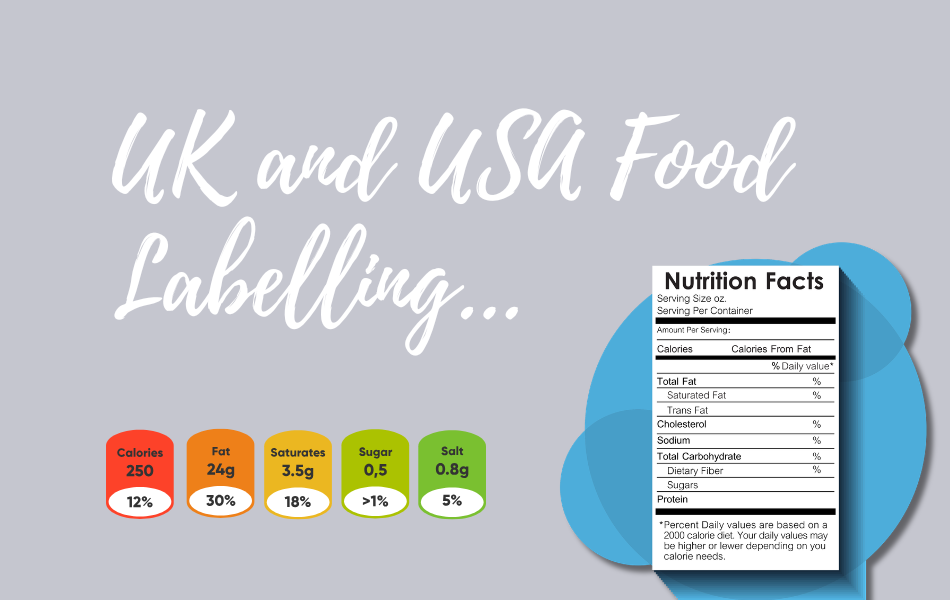
What changes in the United States
The US recognises nine major food allergens under federal law: milk, eggs, fish, crustacean shellfish, tree nuts, peanuts, wheat, soybeans and sesame. Sesame became the ninth under the FASTER Act, with the change taking effect on 1 January 2023. On packaged foods regulated by the FDA, the source of a major allergen must be identified within the ingredients or in a separate ‘Contains’ statement.
There are a few important differences. The UK list separately includes celery, mustard, lupin, molluscs and sulphites, while US federal law covers wheat rather than the wider UK category of cereals containing gluten. US labels must also name the particular tree nut, fish or crustacean shellfish rather than simply saying ‘nuts’, ‘fish’ or ‘shellfish’.
There is another practical gap worth knowing about if you travel. In the UK, Natasha’s Law covers food that is prepacked for direct sale. In the US, most food sold by restaurants and food-service businesses without a prepacked retail label does not fall under the same federal packaged-food labelling requirements. So if you are standing in a US coffee shop looking at a wrapped sandwich in a grab-and-go fridge, do not assume the label will give you exactly the same protection or information you are used to at home. Ask. Check. And if the answer is vague and the allergy is serious, leave it there.
What does ‘may contain’ actually mean
You will often see phrases such as ‘may contain nuts’, ‘made in a factory that handles milk’ or ‘produced on shared equipment’. These warnings relate to possible cross-contact, which is the accidental transfer of an allergen into a product that does not intentionally contain it. It might happen through shared machinery, utensils, preparation surfaces, dust in the production environment or cleaning that has not removed every trace.
A ‘may contain’ warning is different from an allergen deliberately included as an ingredient, but it still matters if you have a serious allergy. Please do not decide that the manufacturer is only covering its backside and take the risk anyway. Your own allergy specialist or medical team should guide you on how to manage precautionary warnings based on your individual allergy.
Why everybody should become a label reader
You do not need an allergy to benefit from turning the packet over. The ingredients list tells you far more than the front ever will, and ingredients are generally listed in descending order by weight. That means the first few items give you a very good idea of what the product is mainly made from.
A packet can shout about protein, fibre, plants and ‘natural goodness’ while the ingredients quietly reveal refined starches, several different sugars, flavourings, colours, emulsifiers and preservatives. Now, that does not mean every ingredient with a long name is automatically dangerous. It DOES mean you should know what you are buying instead of letting somebody in a marketing department choose for you.
This is something I teach throughout The IBS Freedom Method. We look beyond the health halo and use the information on the label to understand what is actually going into the gut, spot possible patterns and make informed choices. I am not interested in turning you into the Food Police or making you frightened of the supermarket. I want you to be able to walk around it with your eyes open, choose what genuinely works for your body and stop being conned by a green leaf and the word ‘wellness’ on the front of a box.
And if you already feel as though you eat well but your digestion is still unhappy, read You Eat a Healthy Diet So Why Is Your Gut Still a Mess. A food can look wholesome, fashionable and wonderfully ‘gut-friendly’ while still being completely wrong for YOUR gut at that particular time.
Common food colours worth recognising
Food colours are added to make products brighter, more consistent and more appealing. You may see a chemical name, an E-number in the UK or an FD&C colour name in the US. Again, I am not asking you to memorise a chemistry textbook before breakfast, but there are a few names you will see regularly.
Tartrazine — E102 or Yellow 5 — is a bright yellow colour used in sweets, fizzy drinks, desserts, sauces and some medicines. Some sensitive people experience reactions such as itching or hives. In the UK, products containing tartrazine must also carry the warning that it ‘may have an adverse effect on activity and attention in children’. Sunset Yellow FCF, or E110, is an orange-yellow colour used in similar products and carries the same warning.
Quinoline Yellow E104, Carmoisine E122, Ponceau 4R E124 and Allura Red AC E129 are also part of that UK warning group. You will find these yellow, orange and red colours in products such as confectionery, jellies, desserts, cake decorations, sauces, soft drinks and brightly coloured snacks. In the US, Allura Red AC is usually called Red 40.
Carmine or cochineal E120 is slightly different because it is a red colouring made from cochineal insects. Yes, actual insects. It can appear in yoghurts, sweets, drinks and cosmetics, can cause allergic reactions in some people and must be named on labels. It is also one to notice if you avoid animal-derived ingredients, because ‘beautiful natural red colour’ does not necessarily mean beetroot.
If you are sensitive to a particular colour, the label gives you the power to avoid it. If you are not, you still get to decide whether a luminous orange drink that could probably be seen from space is something you want to consume every day.
Common preservatives worth recognising
Preservatives do have a practical purpose. They slow the growth of bacteria, yeasts and moulds, protect food from spoilage and help reduce the risk of food poisoning. So I am not going to stand here and pretend every preservative is pointless. But knowing what is present allows you to notice how often you eat it and whether particular ingredients seem to appear alongside your symptoms.
Sodium benzoate E211 is used mainly in acidic products such as fizzy drinks, fruit drinks, sauces, pickles and condiments to limit microbial growth. Some sensitive people report that benzoates aggravate symptoms.
Potassium sorbate E202 is used to slow the growth of mould and yeast in cheese, yoghurt, wine, baked goods, sauces and dressings, particularly products designed to keep for longer after opening.
Sulphur dioxide and sulphites E220 to E228 are found in wine, cider, dried fruit, sausages and some processed potato products. Above the specified concentration, sulphites form part of the UK’s 14 regulated allergens and may trigger breathing problems or asthma-like symptoms in sensitive people. This is a really good example of why reading labels is relevant even when the ingredient does not sound like a typical food allergen.
Nitrites and nitrates E249 to E252 are used in cured and processed meats such as bacon, ham, salami and some sausages. They help control dangerous bacteria and preserve colour. BHA E320 and BHT E321 are antioxidant preservatives that help fats and oils resist rancidity and may appear in cereals, snacks, chewing gum and foods containing processed fats.
The point here is not to panic over one rasher of bacon or empty your kitchen bin at midnight to check the packaging. It is to notice the overall pattern. If most of your food comes in packets and needs a long list of colours, stabilisers and preservatives to remain attractive for months, your gut might appreciate a few more fresh, simple ingredients coming back into the picture.
Are E numbers bad for you
An E-number means an additive has been assessed and authorised for particular uses in Europe. It does not automatically mean ‘toxic’, just as the word ‘natural’ does not automatically mean safe, nourishing or suitable for everybody. Plenty of entirely natural substances can harm you, and plenty of approved additives are tolerated perfectly well by most people.
Dose matters, frequency matters and your individual sensitivity matters. Most importantly, the overall pattern of your diet matters. I am far more interested in whether your everyday food is predominantly fresh, varied and nourishing than whether you occasionally eat something containing one approved additive.
What I do not want is for ultra-processed food to become the foundation of your diet simply because the packaging looks wholesome. When every meal comes from a packet and every ingredients list resembles a chemistry exam, it becomes very difficult to work out what your gut is actually reacting to.
Added sugar is another ingredient that can appear under a frankly ridiculous number of different names. For more on how it may affect IBS and the microbiome, read Sugar With IBS.
How to read a food label without losing the will to live…
You do not need a lab coat, a magnifying glass and a degree in food science. Start with the allergen information. If an allergy is involved, check it every single time and never rely on your memory of what the product contained last month.
Then read the whole ingredients list, not just the bold words. Look particularly at the first three to five ingredients because they normally reveal what the product is mainly made from. Notice how many different forms of sugar or sweetener appear, and whether the list is dominated by refined starches, flavourings, colours, emulsifiers and preservatives.
Next, look at the portion size used for the nutrition panel. Sometimes the numbers look wonderfully restrained because the suggested serving would barely feed a hamster. Compare similar products as well; two jars of tomato sauce can look almost identical on the front and be completely different once you turn them around.
Finally, remember that a familiar brand is not a lifetime guarantee. Recipes change. Check again, especially when an allergy is involved. This sounds like a faff, but once it becomes a habit it takes seconds.
In The IBS Freedom Method, label reading becomes part of building genuine food confidence. Clients learn what they are looking at, what matters for their own gut and how to make a calm decision instead of randomly banning foods. That knowledge becomes particularly useful when we reach the testing and reintroduction stage, because a clean, clear experiment is impossible if five hidden ingredients are gatecrashing the party.
What if reading labels makes you more anxious about food
There is an important balance here. If you have a diagnosed allergy, careful avoidance and label reading are essential. If you have IBS or suspected intolerances, however, removing more and more foods without a clear reason can leave you confused, undernourished and frightened to eat.
Use labels to gather information, not to create an ever-growing banned list. If you have reached the point where every meal feels like a risk assessment and every new ingredient looks guilty until proven innocent, you do not need more random restriction. You need a clear process that helps you work out what is genuinely affecting you.
You may also want to read Why Is the Low FODMAP Diet So Complicated. Food confidence is something we actively rebuild inside TIFM through structured testing, sensible reintroductions and learning how YOUR body responds.
A small habit with a very big impact
Reading food labels helps you protect yourself, protect the people you cook for and make choices based on facts rather than advertising. For one person, it may reveal that a ‘healthy’ cereal is mostly refined grains and sugar. For another, it may help explain a pattern of bloating, urgency or discomfort. For somebody with a severe allergy, it may prevent anaphylaxis and save their life.
So turn the packet over. Read the ingredients. Ask the question. If the information is unclear and an allergy is involved, do not take the risk. There will always be another sandwich. There is only one you!
Want more straight talking gut health advice
If you found this useful, pop your details into the subscription box below and join my mailing list. I share practical IBS advice, food education, recipes and simple ways to support your digestion – without the fads, fear or frankly ridiculous wellness nonsense.
And if you are struggling with bloating, diarrhoea, constipation, stomach pain, food reactions or a diet that seems to be getting smaller by the week, let’s have a proper conversation about what is going on rather than removing another six foods and hoping for the best.
Book a Free Gut Health Call and we will look at your symptoms, what you have already tried and whether The IBS Freedom Method could help you calm your gut, understand your triggers and feel confident around food again.
About Helen Jane
Helen Jane is a qualified Nutritional Therapist and IBS Coach with over 10 years of experience helping people reduce IBS, bloating, food intolerances, digestive discomfort and low energy through practical nutrition and lifestyle changes. As founder of Your IBS Freedom and creator of The IBS Freedom Method, she specialises in helping people improve gut health naturally using food as medicine without restrictive fad diets or unnecessary overwhelm, supporting clients across the UK, Europe and the USA. Read client success stories and reviews here.
Disclaimer
This blog is for educational purposes only and is not a substitute for personalised medical advice, diagnosis or treatment from your GP, allergy specialist or other qualified healthcare professional. Food allergies can cause severe and potentially fatal reactions. If you suspect a food allergy, seek appropriate medical assessment. If somebody is experiencing signs of anaphylaxis, use their prescribed adrenaline auto-injector if available and call the emergency services immediately.
