
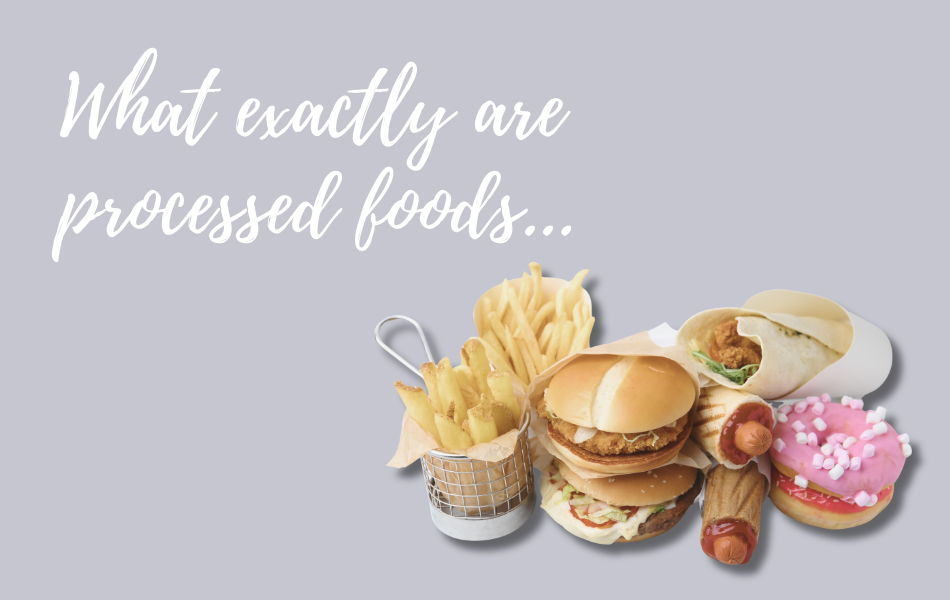
Open the average kitchen cupboard and you’ll find processed food everywhere.
The bread has been milled, mixed, fermented and baked. Butter has been made from cream. Milk has usually been pasteurized and homogenized. Cheese has gone through several stages before becoming that block of cheddar in the fridge, and ham certainly didn’t start life neatly sliced between two bits of bread.
And yet we tend to use the words processed food as though they automatically describe something unhealthy.
That’s where it all gets a bit muddled, because processing covers an enormous range of things. Oats are processed. Rice is processed. Tuna in a tin is processed. Hummus is processed. Pasta is processed.
Even chopping, cooking, freezing, fermenting and blending are forms of processing.
So before we start throwing half the kitchen away, it helps to look at what processing actually means and, more importantly, what has happened to the food along the way.
So what does ‘processed’ actually mean?
In very simple terms, processed food is food that has been changed from its original state before you eat it.
That change could be something as basic as freezing vegetables or rolling oats. It might involve pasteurizing milk, milling wheat into flour, canning fish or fermenting milk to make yoghurt and cheese.
Some processing is there to make food safer. Some helps it last longer, makes it easier to store or gives us something we can actually use in the kitchen.
I certainly don’t fancy chewing my way through a handful of raw wheat grains instead of having toast in the morning.
This is also why I don’t find the advice to “avoid processed foods” particularly useful on its own. It covers far too much.
What people are usually concerned about is food that has gone through much more extensive processing, often with additional ingredients such as flavorings, emulsifiers, sweeteners, colors, stabilizers and preservatives. This is where the term ultra-processed food, or UPF, comes in.
Even then, it isn’t completely black and white.
Some foods that are classed as ultra-processed under commonly used classification systems can still provide useful nutrition. Certain whole meal breads, breakfast cereals and baked beans are good examples.
So I wouldn’t look at the word processed and immediately decide whether a food is good or bad. I’d want to know what the food actually is.
What happens to some of the foods we eat all the time?
Let’s start with five fairly normal foods: bread, butter, milk, cheese and ham.
Bread begins with grain that has been cleaned and milled into flour. That flour is then mixed with water and usually yeast and salt, kneaded, left to ferment, shaped and baked.
A traditional loaf might have a very short ingredients list. A supermarket loaf designed to stay soft for longer may contain extra ingredients to help with texture, consistency and shelf life.
Both are processed.
If bread is something you eat regularly and you’re wondering how the ingredients, type of flour and way it is produced might affect an already sensitive digestive system, read Bread and IBS: Why Your “Staple Diet” Might Be Causing Symptoms
Butter is made by separating cream from milk and churning it until the fat comes together. It may then have salt added before being shaped and packaged.
Again, processed.
Milk will usually have been filtered and pasteurized before you buy it, and most supermarket milk is also homogenized. UHT milk has been treated at a higher temperature so that it can be stored unopened for much longer.
None of that suddenly turns milk into junk food.
And milk is another good example of why the detail matters. Lactose-free milk, for instance, is still dairy milk that has been processed slightly differently to break down the lactose. Dairy-free alternatives are a completely different thing. If those labels leave you wondering what on earth you’re actually buying, read Lactose-Free vs. Dairy-Free: What People With IBS Should Know
Then there is cheese, which goes through a fair few stages. Milk is cultured, curdled, separated from the whey, salted and, depending on the type of cheese, pressed and matured.
Compare a traditional cheddar with an individually wrapped processed cheese slice and you’ll probably find very different ingredients, despite both products being called cheese.
And finally, ham. Ham is cured and may also be smoked or cooked. Different products can contain very different amounts of added water, salt, sugar, preservatives and other ingredients.
Ham also falls under the separate category of processed meat, which is worth being aware of because regularly eating larger amounts of processed meat has been associated with an increased risk of bowel cancer.
So even within this little group of five everyday foods, the type and purpose of processing varies quite a lot.
And then we have the ‘healthy’ processed foods…
This is where the packaging gets clever.
Most people picture processed food as sweets, fizzy drinks, frozen pizza and brightly colored snacks. But stick something in a brown packet, add a few leaves and write HIGH PROTEIN on the front and suddenly it looks terribly virtuous.
There are plenty of foods marketed as healthy that deserve a closer look once you turn the packet over. If you want some examples of how products can acquire a lovely healthy reputation while being rather different underneath, read Unhealthy ‘Health’ Foods: What You Need to Know About “Healthy” Foods
Hummus is processed food.
Chickpeas are cooked and blended with tahini, oil, lemon juice and seasoning. A fairly simple hummus can be a useful source of fiber, plant protein and fats. Other tubs may contain different oils, preservatives, flavorings or considerably more salt.
Oatcakes are processed. The oats have already been cleaned and rolled or milled, then mixed with other ingredients, shaped and baked.
Rice is processed. Oats are processed. Pasta is processed.
And yes, tinned tuna is processed too. The fish has been prepared, cooked, packed into water, brine or oil, sealed and heat-treated before it reaches your cupboard.
It is still tuna and it is still a useful source of protein.
This is why I get slightly twitchy when foods are dismissed purely because somebody has labelled them processed.
Now, vegetable crisps are an interesting one. Some really are thin slices of vegetables that have been baked or fried. Others are made from starches, powders, oils and flavorings which are then shaped into something that looks vaguely vegetable-like.
That beetroot on the front of the bag may be doing quite a lot of heavy lifting.
Protein bars can be equally variable. Some have a relatively simple ingredients list. Others contain protein isolates, sweeteners, syrups, added fibers, flavorings, emulsifiers and several other ingredients designed to give them their particular texture and shelf life.
That doesn’t mean you can never have one. I’d simply turn it over and have a look at what you’re actually buying.
If you want a more detailed look at what food labels actually mean, including the differences between UK and US labelling rules, read UK and USA Food Labelling: Things to Look Out for With IBS
I’m not particularly interested in giving foods moral scores, but it can be helpful to think of them on a rough scale.
This is NOT an official classification. It is simply a practical way of looking at what’s in your trolley.
Grade A – Very little processing
Fruit, vegetables, eggs, nuts, seeds, beans, lentils, fresh meat and fish would generally sit here.
They have not gone through a huge amount before reaching you and they tend to provide plenty of useful nutrients without much being added.
I’d want a good variety of foods like these forming a decent part of most people’s diets.
Grade B – Processed, but still useful
This could include foods such as oats, rice, pasta, milk, natural yoghurt, traditional cheese, tinned fish, tinned beans, simple breads and hummus.
They’ve all been processed in some way, but they can still bring protein, fiber, carbohydrates, vitamins, minerals or useful fats into the diet.
And convenience does matter.
If a tin of beans means you can make dinner in ten minutes instead of ordering a takeaway because you’re exhausted, I’m not going to tell you that you should have soaked dried beans overnight to prove your commitment to nutrition.
Grade C – More heavily processed
This is where I’d start looking more closely at the individual product.
Some breakfast cereals, supermarket breads, flavored yoghurts, ready meals, protein bars, vegetable crisps and meat alternatives may fit here.
There may be more added sugar, salt, refined starches, flavorings, sweeteners, emulsifiers or preservatives, although this varies enormously between products.
Rather than deciding purely on the category, I’d compare a couple of labels and see what you’re actually getting.
Grade D – Foods I wouldn’t want making up most of the diet
Sugary drinks, sweets, many packaged cakes and biscuits and heavily processed savory snacks would generally sit towards this end.
You can absolutely eat these foods.
I’m far more interested in how often they appear than whether you had a packet of crisps on Tuesday.
If most meals and snacks are coming from products that contain very little fiber, protein or micronutrition and plenty of added sugar, salt or fat, then it may be worth looking at what else could come back into the diet.
Look at the nutrition as well as the processing
One thing that tends to get lost in the UPF discussion is the actual nutritional value of the food.
Oats, for example, are processed but provide carbohydrate and fiber, including beta-glucan.
Milk and yoghurt can provide protein, calcium and other vitamins and minerals.
Cheese provides protein and calcium, although some types are also fairly high in salt and saturated fat.
Hummus can provide plant protein, fiber and fats from ingredients such as tahini and oil.
Tinned tuna gives you a convenient source of protein.
Rice and pasta provide carbohydrate, and wholegrain versions usually provide more fibre than their refined equivalents.
And bread can vary enormously, which is why I’d rather you compare two loaves than decide that all bread is either wonderful or dreadful.
You don’t need to memorize every number on the nutrition panel either. Start with the obvious things.
What are the first few ingredients? Is there a decent amount of protein or fiber? Is it very high in salt or added sugar? What are you eating it with? And how often does it appear?
Those questions will usually tell you far more than simply asking whether the food has been processed.
What does this mean if you have IBS?
If you have IBS, please don’t turn this into another list of foods you now think you need to avoid.
Some heavily processed foods can contain lots of different ingredients, and that can make it harder to work out what is actually affecting you.
Take a protein bar. It may contain sweeteners, added fibers, milk ingredients, protein concentrates, flavorings and various other bits and pieces. If you become bloated afterwards, one of those ingredients could be relevant. The portion could be relevant. Or the bar might have absolutely nothing to do with it.
That’s why looking at your own patterns matters.
Some people with IBS find certain sweeteners aggravate their symptoms. Others struggle with particular types or amounts of fiber. Fatty meals, large portions, eating quickly, stress, sleep, hormones and medication can all play a part as well.
And sometimes a food with a very healthy reputation simply doesn’t suit you at that point in time.
That doesn’t make the food bad.
If you already feel as though you eat well but your gut still isn’t happy, you might also find You Eat a Healthy Diet – So Why Is Your Gut Still a Mess? useful.
Do you actually need to avoid processed food?
No.
For most people, it would be both unrealistic and completely unnecessary.
Bread, cheese, yoghurt, pasta, oats, tinned fish, frozen vegetables and plenty of other processed foods can all have a perfectly useful place in the diet.
I’d pay more attention to what makes up the majority of your food.
If most of your meals are varied and contain decent sources of protein, fiber, vegetables, fruit and other useful nutrients, having some more processed foods alongside them is very different from relying almost entirely on heavily processed products.
So next time you hear somebody say they’ve “given up processed food”, you might want to ask what they actually mean.
Because unless they’re grazing directly from the allotment, chances are they haven’t.
Want to understand what’s actually affecting YOUR gut?
If digestive symptoms have left you reading every packet, removing more foods and still feeling none the wiser, adding another category to the banned list probably isn’t going to help much.
Inside The IBS Freedom Method, we look at your food, symptoms, eating habits, lifestyle and individual patterns so that you can start understanding what actually works for YOUR body.
You can also book a Free Gut Health Call and have a proper conversation about what has been happening, what you’ve already tried and whether my approach could be right for you.
About Helen Jane
Helen Jane is a qualified Nutritional Therapist and IBS Coach with over 10 years of experience helping people reduce IBS, bloating, food intolerances, digestive discomfort and low energy through practical nutrition and lifestyle changes.
As founder of Your IBS Freedom and creator of The IBS Freedom Method, she specialises in helping people improve gut health naturally using food as medicine without restrictive fad diets or unnecessary overwhelm, supporting clients across the UK, Europe and the USA. Read client success stories and reviews here
Disclaimer
This blog is for educational purposes only and is not a substitute for personalized medical advice, diagnosis or treatment from your GP or another appropriately qualified healthcare professional. If you have new, persistent, severe or unexplained digestive symptoms, or you are concerned about changes in your bowel habits, please seek appropriate medical advice.
