
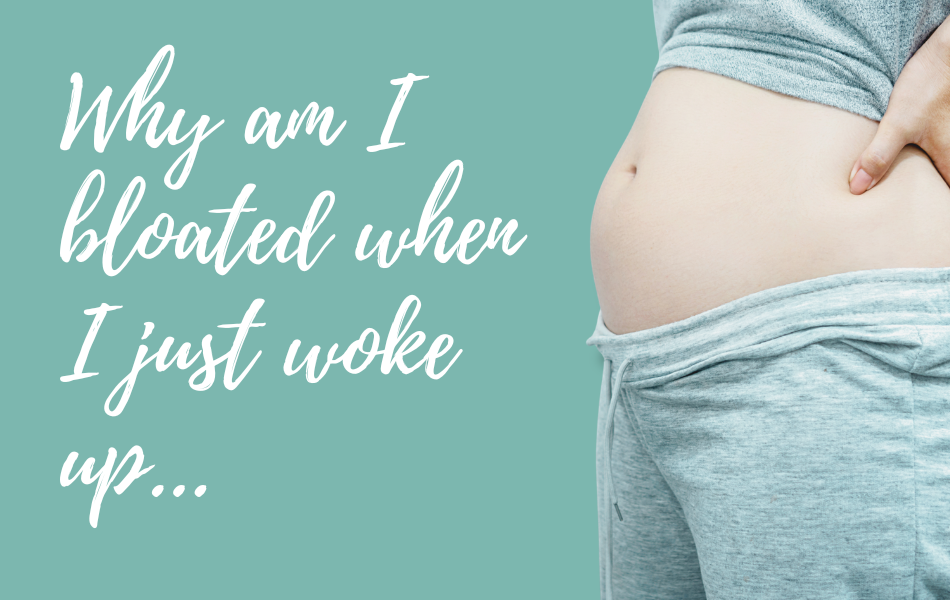
You wake up, you haven’t eaten anything for hours, you haven’t even made it as far as the kettle yet… and somehow your stomach already feels like you have eaten Thanksgiving dinner.
Bloated.
Full.
Maybe a bit gassy, uncomfortable or visibly swollen.
And naturally your first thought is probably, what the hell did I eat?
Except sometimes the answer is not quite that simple, because bloating is not only about the food you have just eaten. Your digestive system does not wipe the slate clean while you are asleep and start again at breakfast. What you ate yesterday, how well your bowels are moving, what your gut bacteria are doing, how sensitive your digestive system is, your hormones, stress and even how much fiber you have suddenly decided to introduce in the name of being ‘healthy’ can all play a part.
So if you regularly wake up bloated before breakfast, there are a few things worth looking at before blaming your morning breakfast…
Firstly… bloating does not always mean you are full of gas
This is quite an important one because we tend to assume that feeling bloated must mean there is an enormous amount of gas sitting in the gut.
Not necessarily.
Bloating is the feeling of fullness, pressure or swelling, whereas abdominal distension is when the abdomen actually becomes measurably larger. You can experience one without necessarily having the other, and some people can feel significant bloating even when the amount of gas in the digestive tract is relatively normal.
This is particularly relevant with IBS because the gut can become much more sensitive to normal stretching. A quantity of gas or stool that somebody else barely notices may feel extremely uncomfortable to somebody with IBS.
Which is honestly a bit bloody unfair.
You can therefore spend ages desperately trying to work out which food has created all this ‘extra gas’ when the issue may also involve how your gut is responding to what is already there.
Your dinner did not disappear when you went to sleep
I know this sounds obvious when you say it out loud, but people often judge morning symptoms entirely by what they have eaten that morning.
“I haven’t eaten anything today, so why am I bloated?”
Because your digestive system is still dealing with yesterday.
Food moves through the digestive tract over many hours. Some carbohydrates are not fully broken down in the stomach and small intestine, so they continue into the large intestine where gut bacteria ferment them. Gas is produced as part of that process. That is completely normal digestion, but if you are particularly sensitive to gas, produce more of it from certain foods or do not move it through the gut particularly efficiently, you may still be feeling the consequences the following morning.
Your digestive system also follows its own daily rhythm, which helps influence things such as bowel movements, digestion and gut activity across the day and night. If you want to understand a bit more about why timing can matter, read Circadian Rhythms: How Your Body Clock Controls Digestion, Sleep and Gut Health
A huge late-night meal, fizzy drinks, alcohol, lots of highly fermentable foods or simply eating far more than usual may therefore have rather more to do with your 7am stomach than the innocent cup of tea you have not even drunk yet.
This does NOT mean everybody with IBS needs to stop eating after some ridiculous wellness-approved cut-off time. I am far more interested in patterns than arbitrary rules. If you regularly eat a very large meal at 10pm and regularly wake up feeling as though you have swallowed a beach ball, however, it is probably worth seeing whether changing the timing or size of that meal makes any difference.
Constipation is a VERY common culprit
And no, constipation does not only mean going seven days without a poo.
You may be opening your bowels fairly regularly but still be constipated if stools are hard, difficult to pass, you are straining, or you constantly feel as though you have not completely emptied.
If stool is sitting in the bowel for longer than it should, you may feel heavy, uncomfortable and bloated. Gas can become part of that picture too, and suddenly you are blaming last night’s broccoli when the bigger issue is that nothing is moving particularly well.
IBS itself can involve constipation, diarrhoea or a delightful combination of both, and people with IBS may also feel pain or bloating from amounts of gas or stool that would not particularly bother somebody else.
So before removing yet another vegetable from your diet, have an honest look at your bowel movements.
How often are you actually going? Are you straining? Do you feel properly empty afterwards? What does the stool look like?
If you are not really sure what counts as a healthy bowel movement, the Bristol Stool Chart: What Your Bowel Movements Reveal About Your Health is actually a very useful place to start. And if constipation is a regular part of your IBS, you may also find IBS Constipation Relief Tips for Easier Bowel Movements helpful.
I appreciate this is not glamorous conversation, but I have built an entire career around talking about poo, so we may as well get on with it.
And then there is fiber…
I tell my clients this again and again: fiber is important, but more is not always better.
Fiber is one of those things that becomes very confusing when you have IBS because you are constantly told you need more of it. And generally, yes, it is important. It helps support normal bowel function, feeds beneficial gut bacteria and, depending on the type, can be very useful for constipation.
But going from hardly eating any to suddenly having oats for breakfast, lentil soup for lunch, five portions of veg, chia seeds, flaxseed, beans AND a fiber supplement because somebody on Instagram told you your gut microbiome needs feeding is quite another matter.
Your bacteria ferment certain fibers, and fermentation creates gas. If your gut is not used to the amount you are suddenly throwing at it, bloating can increase. This is why fiber is usually better increased gradually rather than going from zero to Good God, I have become a lentil.
If this sounds familiar, have a read of Could Fiber Be the Reason You’re Feeling Bloated? because more fiber is not automatically better if your gut is already struggling.
And this links nicely to our October Food of the Month, pumpkin.
Pumpkin can be a lovely addition to the diet and provides fiber along with various vitamins and plant nutrients. But just like any other fiber-containing food, eating loads of it when your gut is already struggling, or suddenly combining it with lots of other high-fiber foods, may leave you feeling decidedly more inflated than autumnal.
That does not mean pumpkin has suddenly become an ‘IBS food to avoid’.
It means quantity matters, the rest of the meal matters, what your gut is accustomed to matters and, as always, YOUR individual digestive system matters.
If you want to know more about how pumpkin may fit into an IBS-friendly diet, including practical ways to enjoy it without automatically assuming it is going to upset your gut, read Pumpkin Season: The Autumn Food Your Gut Might Love
You might also be blaming the wrong ingredient
This happens all the time with foods that contain lots of different things.
Take pumpkin pie. If you eat a slice and become bloated, was it definitely the pumpkin?
Or could it have been the wheat in the pastry? Dairy? The amount of fat? The portion size? Something else you ate alongside it? Or perhaps the pie had absolutely nothing to do with it and you were already constipated before you sat down.
We have a terrible habit with IBS of deciding the last recognisable food we ate must be guilty and then removing it forever.
Onions caused bloating once? Gone.
Bread caused a dodgy stomach? Gone.
Milk looked at you funny? Gone.
Before long your diet becomes smaller and smaller while you are still no closer to understanding what is actually happening.
This is exactly why I am not a fan of randomly eliminating foods without looking at the wider pattern. Food absolutely CAN contribute to IBS symptoms, but the useful question is not simply, “What did I eat?”
It is “what did I eat, how much, what else was happening with my digestion, and does the same thing happen consistently?”
What about SIBO?
If you Google ‘bloated without eating’, you will probably meet SIBO fairly quickly.
SIBO stands for Small Intestinal Bacterial Overgrowth, which means there are excessive numbers of bacteria in the small intestine. Those bacteria can ferment carbohydrates and produce gas, contributing to bloating, discomfort and changes in bowel habits.
So yes, SIBO CAN cause persistent bloating.
It can also occur alongside IBS.
But please do not diagnose yourself with it because somebody on TikTok listed five symptoms and you ticked four boxes. Bloating is incredibly non-specific and can have lots of causes. Breath testing may be appropriate in certain circumstances, but proper assessment is far more useful than guessing.
If your symptoms are persistent, unusual or simply not responding to the things you would normally expect to help, that is the point at which we need to stop blaming individual foods and look properly at what might be happening.
So what would I actually look at?
I would start with the boring-but-useful stuff.
What did you eat the previous evening? Was it a huge meal? What time did you eat? Did you have alcohol or fizzy drinks? Are you constipated? Have you suddenly increased your fiber? Are you sleeping badly? Are you particularly stressed? Do the symptoms change through your menstrual cycle? Does the same food cause the same problem repeatedly, or have you condemned it after one bad Tuesday?
Keep notes for a little while if you need to.
Not because I want you obsessively documenting every blueberry that passes your lips, but because human memory is rubbish when we are trying to spot patterns. We tend to remember the dramatic days and completely forget the five times we ate exactly the same food without a problem.
And change one thing at a time where you can.
If you cut out dairy, wheat, coffee, onions, garlic, beans and sugar, start taking three supplements and begin drinking two litres more water all on Monday, then feel better by Friday… brilliant.
But which thing helped?
No bloody idea.
This is where The IBS Freedom Method comes in
This is exactly why I created The IBS Freedom Method around a structured process rather than another generic IBS diet.
We look at the bigger picture: what you are eating, yes, but also bowel habits, digestive function, symptoms, lifestyle, previous restrictions, stress, possible triggers and what your body is actually telling us over time.
Because I do not want you becoming brilliant at avoiding food.
I want you to understand your own gut well enough that you can make sensible decisions without panicking every time your stomach makes a noise.
Sometimes the answer may involve changing what you eat. Sometimes it may involve changing how much, when or how quickly you eat it. Sometimes constipation needs addressing. Sometimes further investigation is sensible.
And sometimes pumpkin is simply pumpkin and does not deserve the criminal record you were about to give it.
When bloating needs checking properly
Most of us will experience bloating occasionally, and having a bloated morning after a particularly enormous dinner is hardly a medical mystery.
But persistent or frequently recurring bloating should not just be shrugged off indefinitely.
Please speak to your GP or another appropriate healthcare professional if your bloating keeps happening, does not improve, suddenly changes or is accompanied by symptoms such as unintentional weight loss or blood in your stool. Severe sudden abdominal pain, vomiting blood, or being unable to poo or pass gas needs urgent medical assessment.
There are lots of perfectly manageable reasons for bloating, but there are also conditions that need proper investigation. IBS should never become a label we use to explain away every new digestive symptom forever.
My final thought
If you wake up bloated before you have even eaten breakfast, do not automatically assume breakfast is the problem.
Your gut has been doing things all night.
Look at what happened the day before. Look at your bowels. Look at portion sizes, fibre, stress, hormones and the overall pattern rather than interrogating the last vegetable you remember eating.
And please do not start removing perfectly nutritious foods every time your stomach has an off day.
That is how people end up scared of food, eating the same six ‘safe’ meals and STILL bloated.
The aim is not to become better at avoiding everything.
The aim is to understand what the hell is actually going on.
Need help understanding YOUR bloating?
If you are regularly waking up bloated, struggling with constipation or diarrhoea, reacting to foods you used to tolerate or simply feel as though your digestive system has become one enormous guessing game, book a Free Gut Health Call.
We can talk through what is happening, what you have already tried and whether The IBS Freedom Method could help you calm your gut, understand your individual triggers and start building proper Food Confidence again.
No generic banned-food list.
Just a proper look at YOUR gut and what it may actually need.
About Helen Jane
Helen Jane is a qualified Nutritional Therapist and IBS Coach with over 10 years of experience helping people reduce IBS, bloating, food intolerances, digestive discomfort and low energy through practical nutrition and lifestyle changes. As founder of Your IBS Freedom and creator of The IBS Freedom Method, she specialises in helping people improve gut health naturally using food as medicine, without restrictive fad diets or unnecessary overwhelm, supporting clients across the UK, Europe and the USA. My Reviews
Disclaimer
This blog is for educational purposes only and is not a substitute for personalised medical advice, diagnosis or treatment from your GP or healthcare professional. If your digestive symptoms are persistent, severe, changing or causing concern, please seek appropriate medical advice.
