You can spot a slice of onion in a sandwich. You can usually smell garlic cooking from the other end of the house. But onion powder in a hash brown? Or a little garlic tucked away in the seasoning of a sauce? That’s considerably harder to work out.
Most people don’t think twice about the seasoning in a packet of crisps or the ingredients in a tin of baked beans. If you have IBS and onions seem to upset your digestion, however, those little details can become rather important. And if you’re allergic to onion or garlic, knowing exactly what’s in your food isn’t simply a matter of avoiding a bloated stomach.
The problem is that onions and garlic belong to a much bigger group of plants called alliums, and they’re in an extraordinary number of foods. Some are obvious, others are disguised as powders, extracts or flavorings, and not everybody reacts to them in the same way.
So what exactly belongs to this family, why can it cause digestive problems, and how do you work out which alliums might be hiding in your food?
It’s not just onions and garlic. Meet the Allium family
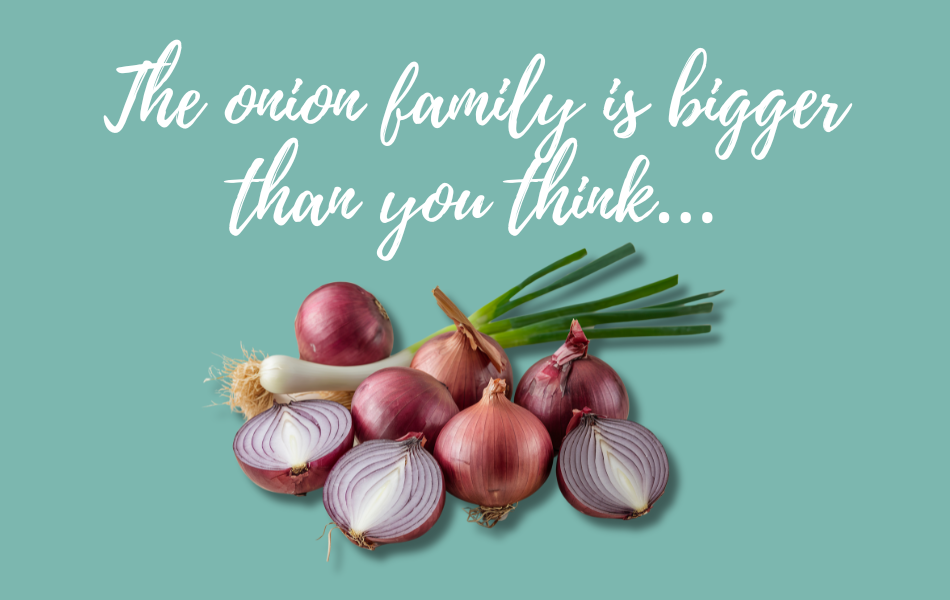
The Allium genus includes hundreds of plant species, although only a handful regularly make their way into our kitchens. Botanically, they belong to the Amaryllidaceae family, but most of us know them simply as the onion and garlic family.
The most common edible alliums are:
- Onions: Red, white, brown and sweet onions, along with dried onion flakes and onion powder. They’re used in practically everything from soups and casseroles to burgers and sauces.
- Garlic: Fresh cloves, roasted garlic, garlic paste, granules and powder. It’s a favorite in Mediterranean and Asian cooking, as well as countless ready-made meals.
- Shallots: Smaller and often slightly sweeter than ordinary onions, commonly found in dressings, sauces and restaurant dishes.
- Leeks: Popular in soups, stews, pies and casseroles. They have a milder flavor, but they’re still members of the same family.
- Spring onions: Also called scallions in the USA. Both the white bulbs and green tops are edible, although their carbohydrate content differs.
- Chives: Those delicate green herbs sprinkled over potatoes, salads and creamy sauces. They might look completely different from an onion, but they’re related.
There are other members too, including wild garlic and garlic chives, but these are the ones you’re most likely to encounter in everyday food.
What makes alliums so useful in cooking is their distinctive flavor. They contain naturally occurring sulphur compounds, responsible for the sharp smell of raw onion and garlic. Cooking changes these compounds and often produces a sweeter, milder flavor.
They’re also nutritionally useful, providing vitamins, minerals and beneficial plant compounds. Onions, garlic and some other alliums contain prebiotic carbohydrates that help nourish bacteria in the gut.
So they’re certainly not foods that everybody should avoid. In fact, for many people, they’re a perfectly healthy addition to their meals.
Unfortunately, a food can be nutritious and still cause problems for somebody whose digestive system doesn’t tolerate it.
Why can alliums upset an IBS gut?
One reason is fructans, a type of carbohydrate found in onions, garlic and several other alliums.
Fructans aren’t fully digested in the small intestine, so they pass into the colon, where bacteria ferment them and produce gas. This is perfectly normal, and the fermentation process can actually benefit our gut bacteria.
But for somebody with IBS, the bowel may be unusually sensitive to gas and stretching. What another person barely notices can mean bloating, cramps, wind or an urgent dash to the loo.
And not all alliums contain the same amounts of fructans.
Garlic and onions are particularly rich sources, while the green tops of spring onions and chives contain much smaller amounts in typical servings. Leeks also vary depending on which part you’re eating, with the green leaves generally being lower in fructans than the white bulb.
This helps explain why somebody with IBS might struggle with garlic but comfortably eat a little chive sprinkled over their potatoes.
The amount matters too. A little onion in a sauce might be fine, while a large serving causes problems. Somebody else might react to even a relatively small quantity.
This is why I don’t believe in giving every member of the Allium family a permanent ban simply because you have IBS (unlike the Low FODMAP Diet). Your digestive system is individual, and knowing what YOU tolerate is far more useful than following somebody else’s list of forbidden foods.
And this is something I teach throughout The IBS Freedom Method. Rather than simply handing you a list of foods to avoid, we work on understanding WHY certain foods might be causing problems, what’s actually happening in your digestive system, and how to make more informed choices about what you eat.
An allium intolerance is not the same as an allium allergy
This is where I want to be quite clear, because the two get muddled together far too often.
An IBS reaction to fructans is a digestive response. Symptoms often involve bloating, wind, pain or diarrhea, and the quantity eaten can influence how you feel. This week, I got all of the above…
A food allergy is different. It involves the immune system reacting to something in the food, potentially causing itching, hives, swelling, vomiting or breathing difficulties. Onion and garlic allergies are uncommon, but they do occur, and severe reactions are possible, including anaphylaxis.
Because alliums are related, somebody allergic to onion may also react to other members of the family. However, that doesn’t automatically mean every allium will cause an allergic reaction.
Please don’t start experimenting with tiny amounts of garlic, leek or chives to see whether they’re safe if you suspect an allergy. That needs proper assessment from your GP or an allergy specialist.
This distinction changes everything, from which ingredients you can use to how careful you need to be when eating out. I’ve explained it further in IBS and Food Intolerances vs Allergies
An onion doesn’t have to look like an onion
This is probably one of the most frustrating things about avoiding alliums.
At home, you know whether you’ve chopped an onion or added garlic to a casserole. But food manufacturers frequently use dried alliums because they’re convenient, inexpensive and add flavor without leaving obvious pieces behind.
Onion powder and garlic powder are particularly common. They’re simply dried, ground versions of the vegetables, so you don’t need to see any actual onion or garlic for them to be present.
Depending on the brand and recipe, you might find them in hash browns, seasoned chips, baked beans, stock cubes, gravy, sausages, burgers, crisps, dressings and ready-made sauces.
Of course, not every product contains them, but you can’t tell by looking at the food.
Then there are the sauces, seasonings and flavorings containing several alliums together. A pasta sauce might contain onion, garlic and shallots, while a stock could have leek or onion powder among its ingredients.
If you’re trying to identify what triggers your IBS, it’s easy to overlook these little additions, especially if you’re only thinking about fresh onions and garlic.
And if you have a genuine allergy, not knowing exactly what’s in the seasoning becomes considerably more serious.
The UK and USA food labelling problem
Here’s the particularly frustrating bit. Onions and garlic aren’t included in the UK’s list of 14 regulated allergens.
These are the ingredients food businesses must specifically identify as allergens, including milk, eggs, peanuts, sesame and cereals containing gluten. On prepacked foods, they must be emphasized in the ingredients list, often in bold.
Onions, garlic and the wider Allium family don’t get that treatment.
Now, that doesn’t mean manufacturers can simply leave onion powder off every ingredients list. Prepacked foods generally have to declare their ingredients, but certain collective descriptions are permitted.
Under UK rules, some spices or mixtures of spices making up no more than 2% of a food can be listed collectively as ‘spices’. You may also see descriptions such as ‘flavorings’ or ‘spice extracts’, which don’t necessarily tell you exactly which plants were used.
That doesn’t prove a product contains onion or garlic. But it doesn’t necessarily confirm they’re absent either.
And that’s exactly the issue I’ve been investigating with baked beans.
Heinz Beanz, for example, list ‘Spice Extracts’ and ‘Herb Extract’ among their ingredients, but those descriptions don’t tell somebody with an onion allergy whether any allium-derived ingredients are present.
And because onion and garlic aren’t among the UK’s 14 mandatory allergens, they don’t benefit from the same specific allergen declaration requirements.
My advice? Don’t just look for the word ONION. Check seasonings, spice extracts and flavorings, and if you’re unsure, contact the manufacturer directly.
Because when you’re dealing with an allergy, guessing simply isn’t good enough.
And what about the USA?
The Food and Drug Administration recognizes nine major food allergens, and onions, garlic and the other alliums aren’t included there either.
There is one useful difference. Under FDA rules for packaged foods, ordinary dried onion and garlic, including their powdered forms, aren’t treated as ‘spices’ and generally need to be identified by name when used as ingredients.
However, certain flavorings can still be declared using terms such as ‘natural flavors’, which may not identify the individual plant sources. Some meat and poultry products also follow separate USDA labelling rules.
So although the regulations differ, neither country’s major-allergen list guarantees that an allium allergy will be obvious from the packet.
If you need to avoid alliums because of an allergy, ask the manufacturer whether the product contains onion, garlic or related ingredients, including extracts and flavorings. If they can’t confirm it’s safe, choose something else.
I’ve explored the wider differences in UK and USA Food Labelling: Things to Look Out for With IBS
And then there’s eating out…
At home, you can leave the onion out of a casserole. In a restaurant, that casserole may have started with onion in the stock, garlic in the sauce and shallots in the seasoning.
Just a few days ago, I went to a café for breakfast. Now, I have an severe onion intolerance -, so I do have to be careful about what I eat.
But I LOVE a good old-fashioned fry-up, and I’ve generally been absolutely fine eating one, even in cafés.
My breakfast included a hash brown and baked beans. No obvious onions, nothing mentioned on the menu. Perfectly innocent breakfast, you would think!
Well, apparently NOT!
I ended up with an IBS flare-up, and naturally, I started wondering what on earth I’d eaten.
Hash browns were my first suspect. Some commercially prepared hash browns contain onion powder, although plenty don’t.
But then I started thinking about the BAKED BEANS!
Now, baked beans are one of my guilty pleasures (I know – of all the things, right?). And yes, I know that haricot beans are legumes, and that the carbohydrates they contain can be fermented by bacteria in the colon, producing gas.
That’s NORMAL! It’s part of how our digestive system works, although it can contribute to bloating and discomfort for people with IBS.
But what about the sauce?
Take Heinz Beanz, for example. Their UK ingredient list includes ‘Spice Extracts‘ and ‘Herb Extract’, without identifying exactly which plants those extracts come from.
Could they contain onion derivatives? Possibly. But I want to know for certain, so I’m seeking clarification from Heinz. I will update you in our IBS WhatsApp Community once I get a response from Heinz.
And if you’re sensitive to the fermentable carbohydrates in beans AND there’s an additional ingredient you don’t tolerate in the sauce, that’s potentially a double whammy!
So was it the hash brown, the baked beans, or a combination of ingredients that upset my gut?
I haven’t established that yet. But it certainly reminded me how easy it is to get caught out, even when you think you know exactly what you’re eating.
That’s the difficulty with eating out. Saying “no onions, please” might remove the obvious pieces, but it won’t necessarily remove onion powder already mixed into a burger, gravy or potato seasoning.
If you have an allergy, explain this clearly to the staff. Ask them to check with the kitchen about ingredients, seasoning mixes, shared equipment and possible cross-contact. Remember that standard allergen information may not cover alliums.
For IBS-related intolerances, simpler dishes or sauces served separately may make things easier, although it’s still worth asking what’s in the food.
There’s more advice in Dining Out With IBS. You should be able to enjoy a meal with friends without spending the entire evening wondering whether the gravy is going to cause problems later.
Can you cook without the Allium family?
You can, although I won’t pretend it’s as easy as deleting “one onion” from a recipe and carrying on.
Onions add sweetness, texture and flavor. Garlic brings something quite distinctive to a dish, while leeks and shallots have their own characteristics. That’s why they’re used so often.
Try building flavor with herbs such as thyme, parsley, rosemary or basil, or spices such as ginger, cumin and smoked paprika, depending on what you tolerate. Carrots can help give soups and casseroles sweetness and body, while lemon zest can brighten certain dishes.
Homemade versions of everyday foods, including potato waffles and baked beans, can also be useful because you control exactly what goes into the seasoning.
You may have heard that garlic-infused oil, chives or the green tops of spring onions can work for people who react to fructans. These can be lower-FODMAP flavour options in certain circumstances because fructans don’t dissolve in oil, and the green parts of some alliums contain less of them.
BUT these are not automatically safe for somebody with an allium allergy. Chives and spring onions are still alliums, and an infused oil isn’t guaranteed to be free from allergenic substances.
Something being lower in FODMAPs doesn’t mean it’s allergy-safe.
Please don’t make your diet smaller than it needs to be
If you have a diagnosed food allergy, avoiding the relevant allergen is essential. If you have IBS, however, the goal is to understand which alliums actually trigger your symptoms, and in what quantity, rather than removing the whole family indefinitely.
This is also why I’m not a fan of recommending a low FODMAP diet as a blanket solution for everybody with IBS.
It can be a useful short-term tool under proper supervision, but it isn’t meant to be a lifelong restriction. Removing onions, garlic, wheat, certain fruits and half your vegetables without a clear plan for reintroduction can leave you with less variety and more anxiety around eating.
I’d rather look at the whole picture: your symptoms, the quantities you’re eating, your usual meals, stress, sleep and other factors that might be affecting your digestion.
This is exactly why I created The IBS Freedom Method. Over 12 weeks, we work through three stages: Prepare, Repair and Build, building real life food confidence is half the program…
We look at what’s happening in your digestive system, explore the foods and lifestyle factors that may be contributing to your symptoms, and work towards getting more variety and confidence back into your diet.
Because the ultimate goal isn’t to spend the rest of your life avoiding everything that might upset your gut. It’s to understand your body, recognize your own triggers and get back to enjoying food without constantly worrying about the consequences.
I’ve explained my concerns in Why Is the Low FODMAP Diet So Complicated?
And remember, not every uncomfortable feeling after a meal comes from fructans. Some people find onions or garlic aggravate acid reflux, while portion size, meal timing and richer foods may also play a part. If reflux is one of your symptoms, read What Causes Acid Reflux?
Still trying to work out what your gut is reacting to?
If you’ve been avoiding foods, checking labels and still dealing with bloating, pain or unpredictable bowels, book a Free Gut Health Call.
We can talk through your symptoms, what you’ve already tried and whether The IBS Freedom Method could help you understand your digestive patterns and feel more confident around meals.
For a suspected allergy, please see your GP or an allergy specialist. IBS coaching is not a substitute for allergy diagnosis or management.
About Helen Jane
Helen Jane is a qualified Nutritional Therapist and IBS Coach with over 10 years of experience helping people reduce IBS, bloating, food intolerances, digestive discomfort and low energy through practical nutrition and lifestyle changes.
As founder of Your IBS Freedom and creator of The IBS Freedom Method, she specializes in helping people improve gut health naturally using food as medicine without restrictive fad diets or unnecessary overwhelm, supporting clients across the UK, Europe and the USA. Read client success stories and reviews here
Disclaimer
This blog is for educational purposes only and is not a substitute for personalized medical advice, diagnosis or treatment from your GP or another appropriately qualified healthcare professional. If you have new, persistent, severe or unexplained digestive symptoms, or you are concerned about changes in your bowel habits, please seek appropriate medical advice.
