
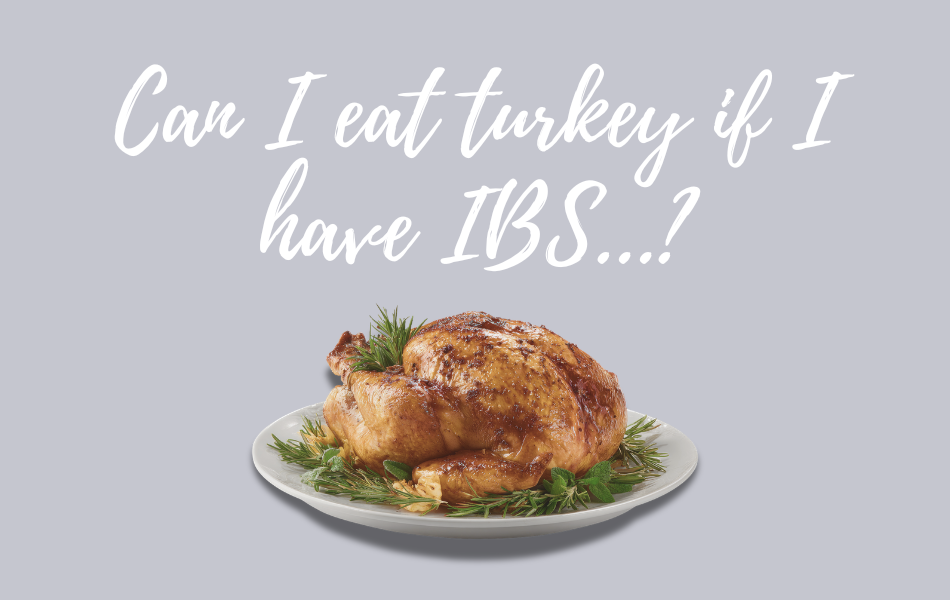
It’s that time of the year again! Thanksgiving is fast approaching, and getting together with family over a lovely meal is one of the best ways to celebrate. There’s the turkey, everyone’s favorite side dishes and usually enough food left over to keep the refrigerator rather busy for the next few days!
But if you have IBS, deciding what to eat can bring another worry. You want to join in and enjoy yourself, while also wondering whether dinner will leave you bloated, uncomfortable or looking for the nearest bathroom.
Turkey is a familiar sight on the Thanksgiving table, so if you’re wondering whether you can eat it with IBS, yes, many people can. Having IBS doesn’t automatically mean turkey is off the menu, or that you have to sit through the celebration with a plate of food you don’t particularly want.
There’s plenty to talk about beyond whether the meat itself agrees with you. I’d like you to understand what you’re choosing without spending the entire afternoon wondering what your stomach is going to do next. There are people to catch up with, after all, and hopefully something rather lovely for dessert.
So, can you eat turkey if you have IBS?
Plain turkey is a protein-rich food that can fit into a varied diet for many people with IBS. The meat itself contains virtually no carbohydrate, which means it doesn’t contain the fermentable carbohydrates known as FODMAPs. Those carbohydrates can contribute to gas and bloating in some people, although individual tolerance varies.
That doesn’t mean you need to start following a restrictive diet to eat Thanksgiving dinner. It simply helps explain why the turkey itself may be perfectly manageable, even if you’ve felt uncomfortable after a turkey meal before.
Skinless turkey breast is a leaner option than skin-on portions. If you know that rich, fatty meals tend to upset your stomach, you may find that a helpful choice. But there’s no need to remove the skin or avoid dark meat purely because somebody else with IBS does; your usual response matters too.
Turkey also doesn’t provide fiber, so eating only the meat isn’t necessary or particularly balanced. Potatoes, vegetables and other foods you tolerate can still have a place alongside it. We’re trying to help you put together a meal you can enjoy, not reduce Thanksgiving dinner to two lonely slices of turkey.
Of course, none of this makes turkey a treatment for IBS. It can simply be part of a meal you enjoy, alongside other foods that work for you.
Before we blame the turkey…
A turkey roasted with herbs is quite different from one covered in a rich glaze, injected with a seasoning mixture or deep-fried. Add gravy, stuffing and sauces, and there are quite a few ingredients involved before you’ve even thought about dessert.
If you felt awful after last year’s dinner, it’s understandable that you might be wary of eating it again. But before turkey gets crossed off the list, think about what was actually on the plate. A heavily seasoned roast with several rich sides is quite a different meal from the turkey sandwich you might happily eat at another time.
Onion and garlic can turn up in stock, marinades, gravy and seasoning blends. If either causes you problems, check the ingredients before cooking or ask the person preparing the meal. A ready-seasoned turkey can contain more than you’d expect from looking at the meat.
There’s still plenty of scope for flavor. Rosemary, thyme, parsley and other herbs you tolerate can work beautifully, and you can serve gravy separately so everyone chooses their own amount. You don’t need to make the entire family’s dinner identical to your plate.
Fancy making the turkey yourself this year? Here’s a roast turkey recipe to work from, with a little planning for the overnight brine. We’ll be adding it to our website’s recipe collection soon, so you’ll be able to find it there too!
Roast turkey with herbs
Ingredients
- An 18-pound turkey, giblets removed
- 2 cups kosher salt
- ½ cup melted butter
- 2 onions
- 4 carrots
- 4 celery stalks
- 2 thyme sprigs
- 1 bay leaf
- 1 cup white wine
Method
- Salt the turkey; submerge in cold water. Refrigerate overnight.
- Discard brine; dry turkey. Chop vegetables.
- Butter turkey; arrange breast-down on a roasting rack. Divide vegetables and herbs between cavity and pan; add wine to pan.
- Roast at 350°F for approximately 3½ – 4 hours, turning breast-up and buttering again two-thirds through.
- Rest 30 minutes before carving.
A couple of things before you start: Use a fully thawed turkey and keep it refrigerated at 40°F or below throughout brining, in a food-safe container. Cooking time is only a guide: check for 165°F in the thickest breast and innermost thigh and wing, keeping the thermometer clear of bone. Use secure grips and help when turning a hot, heavy bird.
And please check the ingredients against what you already know suits you. If onion is a trigger, leave it out of both the turkey and the pan. Adjust other ingredients as needed; this isn’t a promise that this recipe will suit your IBS.
And if turkey isn’t your thing, you don’t have to cook it simply because it’s Thanksgiving. My Roast Chicken Dinner is another option if you still fancy a roast. You can choose a meal you enjoy and keep the occasion special without buying an enormous bird.
For a smaller gathering, you might prefer my Steak Dinner, served with new potatoes and salad. It’s a simple alternative if those foods normally suit you. The same considerations apply: think about your portion, the added butter and your own tolerance, rather than assuming one type of meat is automatically better for every gut.
And what about all the lovely stuff that comes with it?
Now, I’m quite aware that some of you are far more interested in the potatoes and dessert than the turkey. Fair enough! There’s no reason to start crossing every side dish off the menu before you’ve even looked at what’s in it.
The useful question is what’s actually in each dish. Your family’s mashed potatoes might contain a little milk and butter, while another version uses cream, cheese and garlic. The name of the dish doesn’t tell you the whole story.
If lactose is a known issue, lactose-free milk may be useful in mashed potatoes. If you tolerate ordinary milk in the amount used, there’s no need to change it. And if it’s a very rich meal that tends to cause trouble, the amount of cream and butter may be more relevant than the potatoes themselves.
Stuffing varies just as much. Bread, onions, sausage, dried fruit and stock can all appear, depending on the recipe. Ask about ingredients that matter to you, and remember that gluten-free doesn’t automatically mean free from onion, garlic or anything else you may need to consider.
Vegetables deserve the same sensible approach. Green beans on their own are a different dish from green beans in a creamy casserole topped with crispy onions. Before deciding you can’t eat a particular vegetable, look at how it has been prepared and what you already know about your tolerance.
If you’d like something different to put on the table, my Minty Potato Salad is one of my favorites. It combines potatoes with fresh mint, parsley, mayonnaise and optional Dijon mustard. It may not be your traditional Thanksgiving potato dish, but it’s an option for a shared buffet or a meal alongside turkey over the holiday weekend.
And of course, there’s dessert! My Pumpkin Pie has a Brazil nut and date base, with pumpkin, coconut milk, eggs and warming spices in the filling. It’s a different take on the usual pastry version, so have a look at the ingredients before deciding whether it suits you.
And if you’re more interested in chocolate than pumpkin, have a look at my Healthy Brownies. There’s no rule that says everyone has to want pie! They’re another idea for the dessert table or something to share over the holiday weekend.
Choose whichever recipe appeals to you, checking the ingredients against your own tolerances and any allergies. The pumpkin pie contains Brazil nuts, and a recipe being called “healthy” doesn’t automatically mean it will suit every person with IBS. You can enjoy a dessert without needing it to do a special job for your digestion.
I’d quite like you to enjoy your dinner!
I know how much thought can go into a meal before you’ve eaten a single mouthful. When I was younger, I became so worried about my digestive symptoms that I avoided eating in front of my boyfriend. I was hungry, but at the time that somehow felt preferable to risking what my gut might do afterward.
So if you’re quietly considering skipping dinner to avoid the whole business, I understand how you got there. Being told to “just relax and enjoy yourself” isn’t terribly helpful when experience has given you a reason to worry. You need a few practical ways to make eating feel less uncertain.
A few decisions before dinner can leave you with less to work out at the table. Keep reasonably close to your usual eating routine, rather than skipping meals to save room. Arriving absolutely starving can make it much harder to eat at a comfortable pace or judge how much you want.
Start with a portion that feels manageable and give yourself time to enjoy it. You can have more if you want it, but you don’t have to accept a second helping simply because someone is standing beside you holding the serving spoon!
The same applies to dessert. If you’re comfortably full, save some for later. That isn’t missing out; it means you can enjoy it when you actually feel like eating it.
Remember drinks as well. More coffee, alcohol or soda than usual can be another difference on a holiday. Have water available and make choices based on your usual tolerance, rather than treating the food as the only thing worth considering.
This is the sort of Food Confidence we work on inside The IBS Freedom Method. Through Prepare, Repair and Build, we look at your symptoms and eating habits, then help you put what you’re learning into practice. Knowing what suits you at home is useful, but being able to use that understanding at a family dinner matters too.
You don’t need to make Thanksgiving a test of whether you can manage IBS perfectly. If you feel uncomfortable afterward, consider what was different without immediately banning everything you ate. New, severe or unusual symptoms should be checked medically rather than automatically put down to IBS.
Not doing the cooking? Have a chat first…
Eating away from home can feel more uncertain because you haven’t seen what went into the pans. A short conversation before the day is often easier than asking several questions while your host is trying to get everyone seated and find the gravy boat.
Be specific about what you need to know. “Does the turkey seasoning contain onion?” gives someone a clear question to answer. “Can I eat this with IBS?” is harder, because your host probably doesn’t know what YOUR gut tolerates.
You could offer to bring a dish to share, perhaps a side or dessert you know works for you. That gives you something familiar to enjoy while contributing to the meal, and you can still choose from the other dishes that suit you.
If you have a food allergy or celiac disease, explain those requirements clearly, including precautions against cross-contact. That needs a more specific conversation than saying you have a sensitive stomach.
And please don’t feel you owe the whole table a detailed account of your digestion. “That was lovely, thank you. I’ve had enough for now” is a perfectly reasonable response to another helping. You can appreciate someone’s cooking without eating more than you feel comfortable with.
If food worries regularly make you turn down invitations or spend family occasions feeling on edge, you’re welcome to have a Free Gut Health Call with me. We’ll talk about what’s happening, what you’ve already tried and whether The IBS Freedom Method could be the right support for you.
Ask what you need to ask, choose what suits you and enjoy the people you’ve come to see. You can leave the extra helping without leaving the celebration. And if someone insists you take dessert home, well, that’s what containers are for!
About Helen Jane
Helen Jane is a qualified Nutritional Therapist and IBS Coach with over 10 years of experience helping people reduce IBS, bloating, food intolerances, digestive discomfort and low energy through practical nutrition and lifestyle changes.
As founder of Your IBS Freedom and creator of The IBS Freedom Method, she specialises in helping people improve gut health naturally using food as medicine without restrictive fad diets or unnecessary overwhelm, supporting clients across the UK, Europe and the USA. Read client success stories and reviews here
Disclaimer
This blog is for educational purposes only and is not a substitute for personalised medical advice, diagnosis or treatment from your GP or another appropriately qualified healthcare professional. If you have new, persistent, severe or unexplained digestive symptoms, or you are concerned about changes in your bowel habits, please seek appropriate medical advice.
